Zugidentifikation/en: Unterschied zwischen den Versionen
Aus RailRoad&Co.-Wiki
Zur Navigation springenZur Suche springen
Uslex (Diskussion | Beiträge) Die Seite wurde neu angelegt: „In [https://www.freiwaldsoftware.de/forum/viewtopic.php?p=190689#p190689 this post] Mr. Freiwald describes the purpose of train identification as follows:“ |
Uslex (Diskussion | Beiträge) Die Seite wurde neu angelegt: „*Source: [https://www.freiwaldsoftware.de/forum/viewtopic.php?p=190689#p190689 Forum] *TC-wiki: Virtual contact makes train disappear“ |
||
| (6 dazwischenliegende Versionen desselben Benutzers werden nicht angezeigt) | |||
| Zeile 17: | Zeile 17: | ||
:[[Datei:Lok links.JPG|Lok links.JPG]] | :[[Datei:Lok links.JPG|Lok links.JPG]] | ||
: | :''Fig: Locomotive on the left'' | ||
'' | |||
'''Train identification''' is used in TrainController to identify trains that enter a block from "''''nowhere''''" or are deployed manually. | |||
''' | |||
< | <span id="Zugverfolgung"></span> | ||
=== | === Train Tracking === | ||
Once a train has been identified, it continues to be monitored by TrainController as normal. This means in particular: | |||
*The current block remains current until the train is detected in another block, i.e., via train tracking, manual shunting, or train identification in another block. | |||
* | *A departure from the block reported via train identification is irrelevant to TrainController and is not even reported by a number of train identification systems. | ||
* | |||
== Weblinks == | == Weblinks == | ||
*Source: [https://www.freiwaldsoftware.de/forum/viewtopic.php?p=190689#p190689 Forum] | |||
* | *TC-wiki: [[Special:MyLanguage/Virtueller Kontakt lässt Zug verschwinden|Virtual contact makes train disappear]] | ||
*TC-wiki: [[Special:MyLanguage/Virtueller Kontakt lässt Zug verschwinden| | |||
Aktuelle Version vom 1. Januar 2026, 18:11 Uhr
| Verwendung |

|
Train identification and train tracking
Unmonitored areas
When a locomotive moves from a monitored to an unmonitored track section, the block just left is not released but remains reserved. If the locomotive then returns to a monitored block, its name is not displayed. The train identification system only recognizes it after a restart.
Train Identification
In this post Mr. Freiwald describes the purpose of train identification as follows:
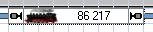
- Fig: Locomotive on the left

Train identification is used in TrainController to identify trains that enter a block from "'nowhere'" or are deployed manually.
Train Tracking
Once a train has been identified, it continues to be monitored by TrainController as normal. This means in particular:
- The current block remains current until the train is detected in another block, i.e., via train tracking, manual shunting, or train identification in another block.
- A departure from the block reported via train identification is irrelevant to TrainController and is not even reported by a number of train identification systems.
Weblinks
- Source: Forum
- TC-wiki: Virtual contact makes train disappear